Inkling
2026 · editing 3D worlds by talking to them
A generated world is a cloud of half a million soft dots with no objects in it. Inkling lets you click on a thing in one and say what you want done to it.
01
A room, and three things said to it
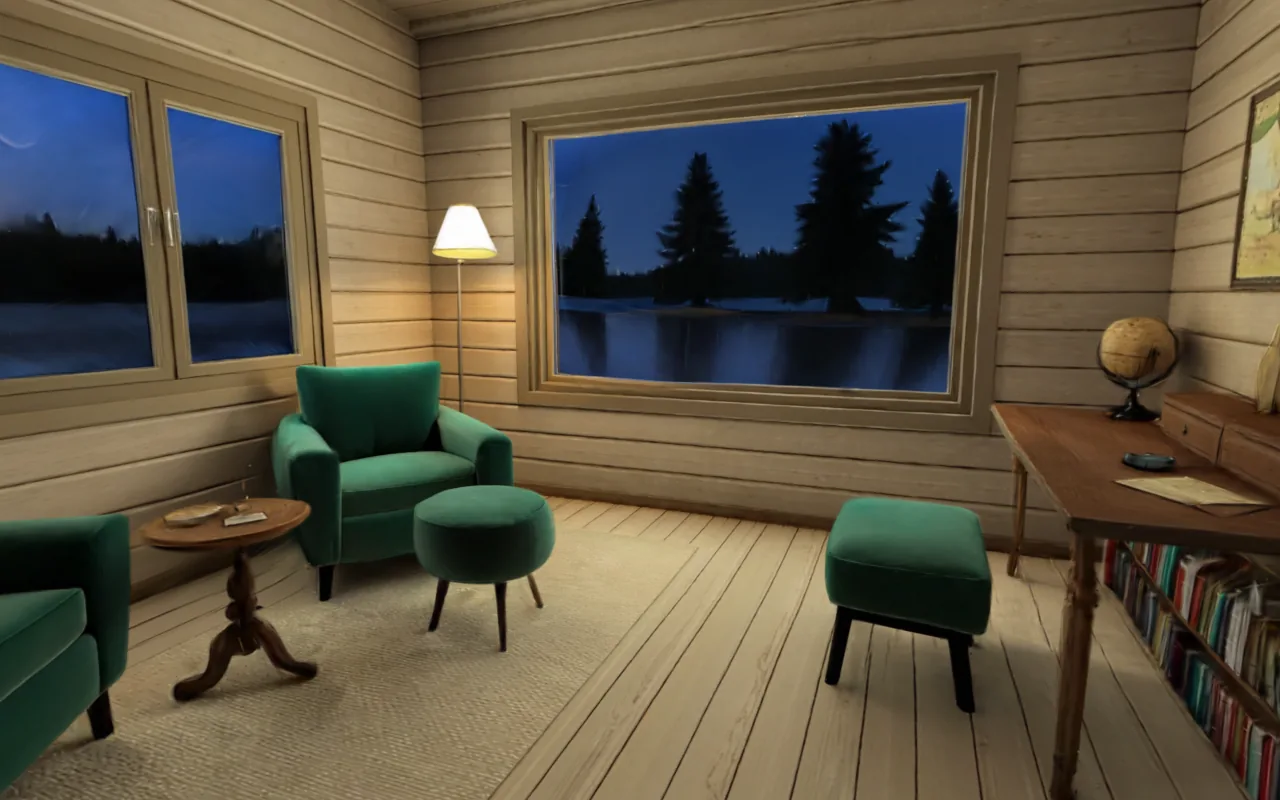
This room was generated from one paragraph of text. Below is a recorded session: three clicks, three sentences, and what happened. Nothing is called while you watch: the edits are made again here, in your browser, dot by dot, from the record of the session.
02
Who does what
The model is asked two easy things: what was clicked, and roughly where all of it is in the picture. Its answer is the line shown under the room. Everything after that is geometry. The floor and the walls near the click are found and set aside, and the dots that touch one another are gathered, starting from the one that was clicked. That takes under a second, and the same click always gathers the same dots.
- It changes the thing and nothing else. The armchair is recoloured one dot at a time, each keeping its own light and dark, so the folds of the cushion survive and the wall behind is untouched.
- A thing can be slid, but not turned far. Moving the footstool is arithmetic on its dots. Turn the armchair round, though, and there is no back to it: the world was made from one place, and only what could be seen from there exists.
- Taking a thing away leaves a mark. The floor under an object was never seen when the world was made. It is repainted from the floor around it, and a soft patch still shows.
- Small, far things are beyond it. At the far end of a room the dots are ten times larger and further apart, and a vase on a mantelpiece is not gathered whole.
03
Where it began
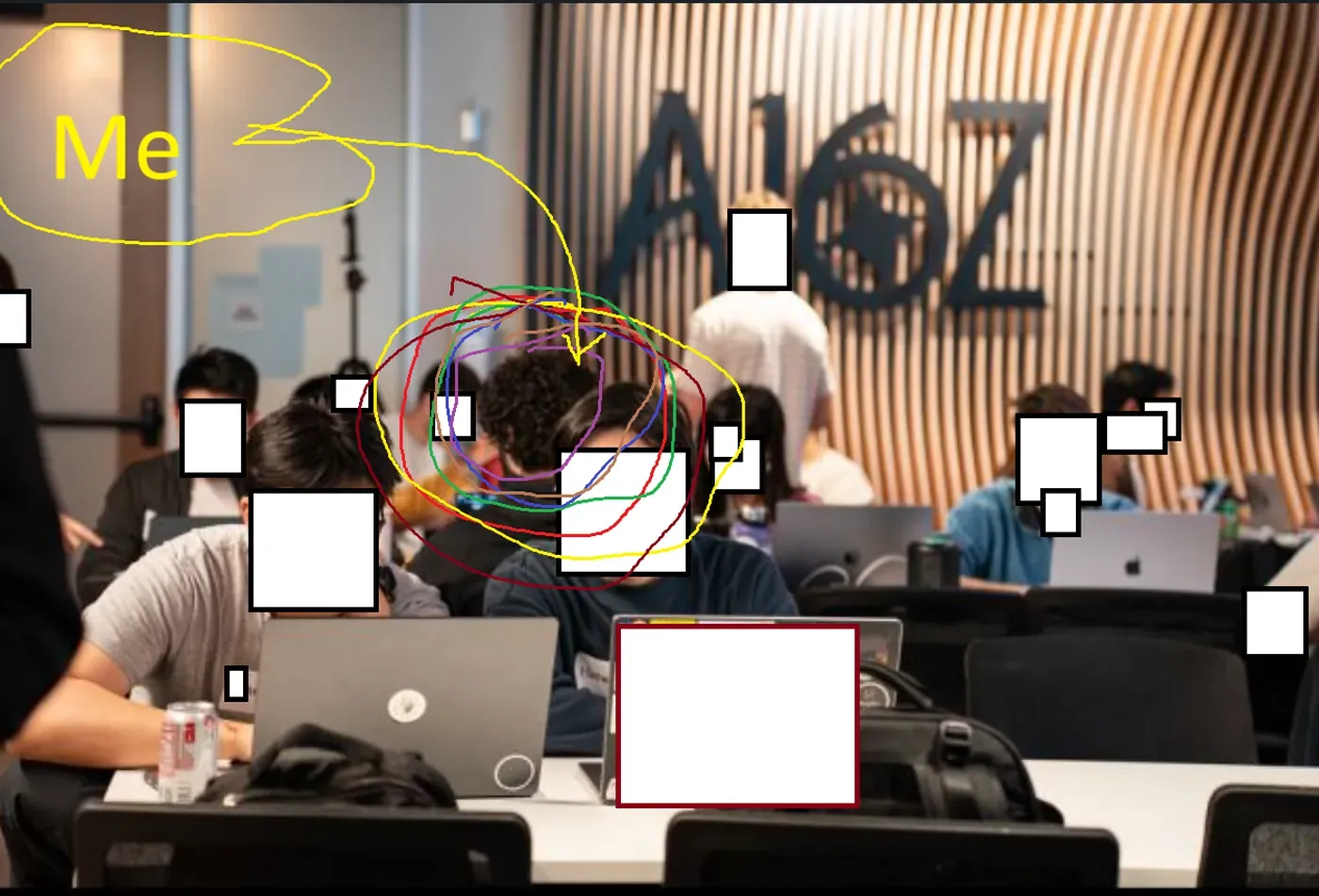
Inkling was begun in an afternoon in February 2026, at the first World Labs hackathon. What it could do then was hide whatever fell inside a box or a ball. Choosing the object itself came later.
I was there
The room was generated with Marble, by World Labs, and is drawn with Spark.